

Logistics Trends to Watch in 2026: Data, Insights & What’s Next
3 minute read
Author: M.S.
The logistics industry is entering 2026 amid profound transformation. Fueled by artificial intelligence (AI), automation, sustainability goals, and shifting global trade patterns, logistics leaders are reimagining supply chains to be faster, smarter, and more resilient. Below, we break down the key trends shaping the year ahead, backed by the latest data and real changes happening now.
AI and Automation Take Center Stage
Artificial intelligence is no longer just a buzzword, it’s an operational necessity.
AI isn’t just predictive anymore, it’s moving toward autonomous decision‑making. Systems are increasingly capable of rerouting shipments, adjusting inventory, and responding to disruptions without human intervention. GPCSL+1
Adoption of AI tools is rising fast: nearly 47% of North American shippers already use AI for freight forecasting or operational tasks, with broader adoption expected in 2026 and beyond. Descartes
Logistics firms that implemented AI have shown measurable performance benefits, such as reduced operating costs and improved capacity utilization. For instance, C.H. Robinson’s recent AI‑driven efficiencies helped its shares hit record highs while reducing expenses. Reuters
Why it matters: AI cuts decision latency, improves forecasting accuracy, and helps logistics ecosystems adapt in real time to disruptions.
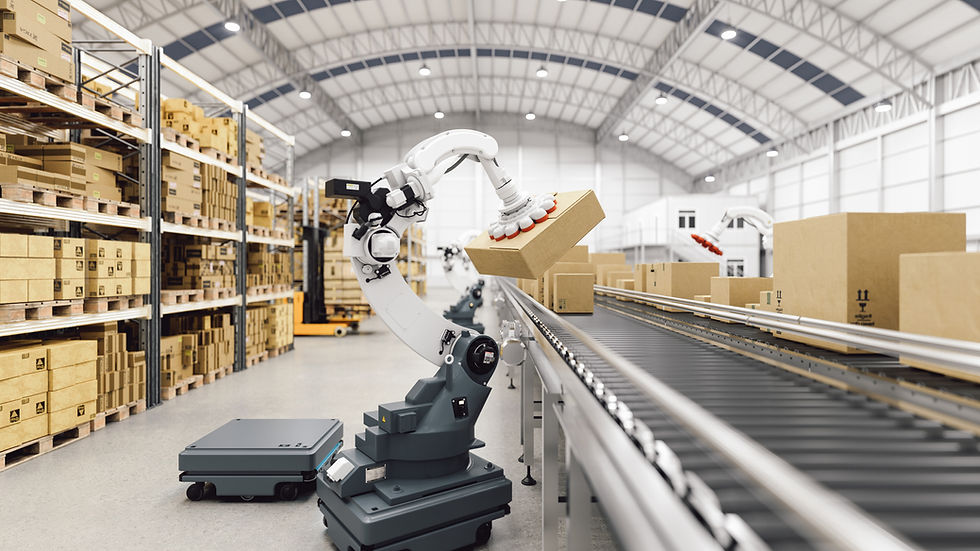
Automation and Robotics Transform Warehouse Operations
Warehousing is becoming a major battleground for technology innovation.
The warehouse robotics market is projected to reach $21.08 billion by 2030, growing at a ~17.7% CAGR. Maersk
Smart warehouses use robotics, automation, and AI together to streamline inbound/outbound flows, reduce error rates, and increase throughput. Maersk
Nearshoring and regionalization also influence warehouse strategy, companies are placing inventory closer to customers and adapting layouts to handle diverse SKU volumes. Rack USA
The impact: Improved accuracy, lower labor cost pressures, and faster fulfillment, especially for e‑commerce and omnichannel operations.
Digital Transformation and Visibility Across the Supply Chain
Real‑time data and connectivity are core to modern logistics.
Technologies like IoT sensors, RFID, and cloud platforms are making end‑to‑end supply chain visibility the new standard. advatix.com
Nearly 70% of North American shippers now share transportation data across teams and partners to improve responsiveness. Descartes
Digital platforms now unify booking, documentation, execution, and analytics, reducing friction between carriers, shippers, and customers. Maersk
Result: Faster problem detection, better coordination across tiers of suppliers, and smarter risk management.
Autonomous Transport & the Future of Freight
Driverless technology and autonomous systems aren’t just futuristic, they’re rolling out now.
Companies are actively deploying autonomous trucks on public highways, moving commodities and goods with less reliance on human drivers. Midland Reporter-Telegram
Autonomous freight systems address a persistent driver shortage and improve utilization by running extended hours. Financial Times
Looking ahead: Expect deeper integration of autonomous fleets in long‑haul and even last‑mile delivery where regulation and infrastructure permit.
Sustainability Is More Than Compliance, It’s Competitive
Carbon emissions, green fleets, and sustainability targets are reshaping routing and operations.
Logistics companies increasingly adopt electric vehicles, optimized fuel routing, and eco‑friendly packaging to reduce emissions. keentransport.ca
Advanced planning tools are now used to simulate and measure environmental impact, turning sustainability into a strategic advantage. GPCSL
The trend: Sustainability isn’t just regulation, it boosts reputation and can unlock cost savings through efficiency.

Nearshoring and Network Resilience
Global disruptions have shown that just‑in‑time isn’t enough.
Strategic takeaway: Multi‑region strengths help mitigate geopolitical and economic extremes.
Dedicated Capacity and Hybrid Logistics Models
Logistics strategies are evolving with a blend of flexibility and stability.
Nearly half of North American shippers now use dedicated fleets alongside carrier partnerships to secure capacity and control service quality. Descartes
What this means: Companies are balancing asset‑light with asset‑secure approaches to hedge against market swings.
Talent Shift: Tech‑Driven Workforce
Even as automation grows, human expertise remains vital.
Demand for tech‑savvy logistics professionals — from AI trainers to data architects, is rising. GPCSL
At the same time, career paths in logistics are shifting from manual roles toward high‑skill digital operations.
Bottom line: Companies that invest in training and talent development will outperform peers in operational excellence.
Final Thoughts
The logistics landscape in 2026 is being reshaped by digital transformation, automation, AI, sustainability, and adaptability.
Companies that invest in talent development, training, and cutting-edge logistics technology are the ones that will thrive in 2026 and beyond. Tools like Amous TMS give shippers, carriers, and 3PLs the competitive edge they need. By combining AI-driven insights, real-time supply chain visibility, and modular automation, Amous TMS allows logistics teams to respond faster to disruptions, optimize routing, reduce costs, and improve service levels.


Regarding the discussion on warehouse equipment, I’ve been looking into the practical differences between manual and electric units lately. From a purely operational standpoint, the transition to lithium-powered jacks seems to be the standard move once you're clearing more than 20 pallets a shift to manage fatigue.
I noticed some Canadian-based suppliers like Sumachay are stocking units with 18-month warranties, which is slightly above the industry average of 12 months. For those interested in technical specs or comparing load capacities—usually ranging from 3,300 lb for light electrics up to 6,600 lb for heavy-duty manual pumps—you can Watch this to see the specific fork dimensions and shipping terms they offer. They seem to focus on the standard 27x48-inch GMA pallet sizes common…